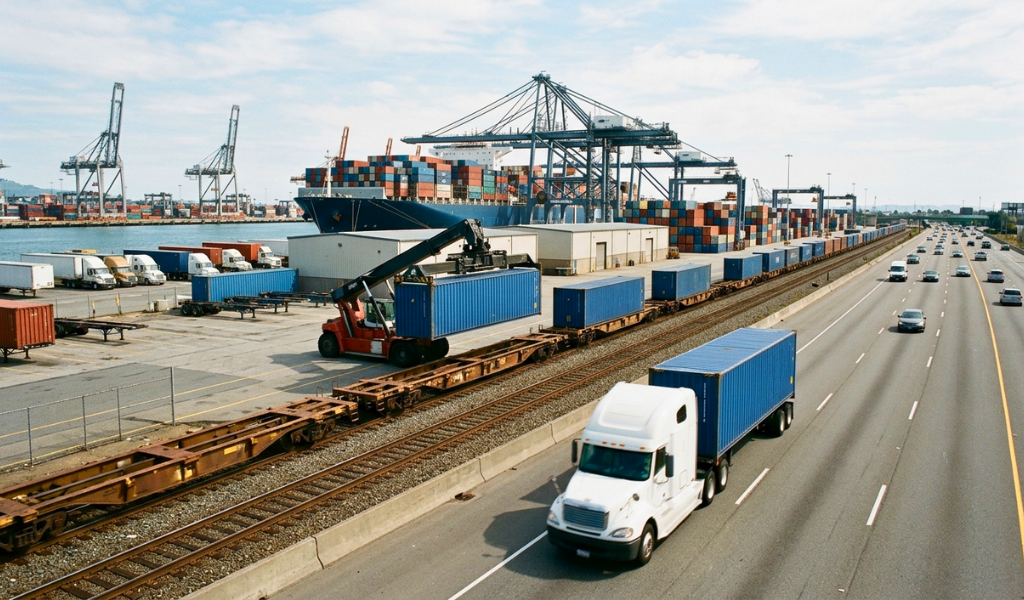
What Is the Best Way to Manage Sea Freight From India to Canada?
Managing sea freight from India to Canada involves more than simply booking a container. Each step, from choosing the right shipping method and preparing documentation to arranging customs clearance and the last-mile delivery, can affect the cost, time, and security of the cargo.
If your business ships commercial goods internationally, a good India-to-Canada ocean freight plan can make shipments more predictable and easier to manage. The trick is knowing what you need to ship, comparing what’s out there, and partnering with an experienced logistics company.
Quick Summary
Depending on the shipment, the process may consist of:
1. Cargo Preparation
Goods should be properly packed for long-distance ocean shipping. Packaging must protect products against handling, movement, moisture, and changing environmental conditions.
2. Documentation
Commercial invoices, packing lists, shipping documents and all other required documents must be accurate and consistent. Customs delays can be caused by missing or wrong information.
3. Ocean Transportation
Cargo is shipped from an Indian port to a Canadian port. Transit times will vary by origin, destination, shipping route, carrier schedules, and other operational factors.
4. Customs and Final Delivery
When it shows up, the shipment may need to get through customs before it can be taken to its final location. Transport may be by truck or other means, depending on the service selected.
For this reason, sea cargo from India to Canada should be managed as an end-to-end logistics process rather than as an isolated ocean shipment.
FCL means your shipment fills a whole container. This is a practical choice for larger shipments or items that require their own container space.
LCL allows cargo from different shippers to fill the space in a container. Your shipment may not be enough for a full container, which is understandable.
When planning India-to-Canada container shipping, consider cargo volume, handling requirements, budget, delivery schedule, and the possibility of future shipments.
Cargo Volume and Weight
Your shipment will be priced based on the dimensions and weight of your shipment, and LCL or FCL will be more economical.
Port and Route
Ports of origin and destination, the route of the shipment, the carrier, and the sailing schedules available can all affect the overall cost of transportation.
Cargo Type
Logistics costs can rise due to special handling, odd sizes, fragile goods or specific regulatory needs.
Additional Services
Cargo pick-up, warehousing, customs assistance, insurance, documentation and final-mile transportation might affect the total cost.
Therefore, a detailed quote must cover more than just the basic ocean freight charge. Ask about inclusions and the possibility of extra destination or handling charges.
Look for a goods forwarder that provides:
Globex Logistics can assist businesses in coordinating their international freight needs and provide hands-on support during the shipping process.
Practical Information Table
Consolidating compatible shipments is also good for efficiency. If you are a company that ships goods on a recurring basis, take a look at your shipping patterns and negotiate service agreements based on regular volume.
Most important is keeping the lines of communication open between the shipper, the goods forwarder, customs representatives, and the receiving party. This minimises unnecessary misunderstandings.
For companies seeking warehouse logistics services, including international transportation, the integration of warehousing and freight planning can further streamline the supply chain. If your business requires coordinated transportation and logistics solutions, Globex Logistics can help.
Also Read: Ocean Freight Consolidation: A Smarter Way to Ship International Cargo
Working with an experienced freight forwarder can also make coordinating ocean freight from India to Canada easier. For your upcoming shipment, you might want to speak with Globex Logistics about your cargo details and delivery needs to determine which goods would be best for you.
If your business ships commercial goods internationally, a good India-to-Canada ocean freight plan can make shipments more predictable and easier to manage. The trick is knowing what you need to ship, comparing what’s out there, and partnering with an experienced logistics company.
Quick Summary
- Suitable for large, heavy, or non-urgent shipments by sea freight
- Depending on the volume of the cargo, FCL and LCL have their own benefits.
- Cargo size, weight, route, documentation, destination services and other factors affect shipping costs.
- Good packaging and proper paperwork help cut delays.
- A good goods forwarder can take care of transportation, customs, and delivery.
What Does Sea Freight From India to Canada Involve?
Sea Freight From India To Canada usually starts with cargo pickup or delivery to a suitable port in India. The shipment is consolidated or loaded into a container and shipped by ocean to Canada.Depending on the shipment, the process may consist of:
1. Cargo Preparation
Goods should be properly packed for long-distance ocean shipping. Packaging must protect products against handling, movement, moisture, and changing environmental conditions.
2. Documentation
Commercial invoices, packing lists, shipping documents and all other required documents must be accurate and consistent. Customs delays can be caused by missing or wrong information.
3. Ocean Transportation
Cargo is shipped from an Indian port to a Canadian port. Transit times will vary by origin, destination, shipping route, carrier schedules, and other operational factors.
4. Customs and Final Delivery
When it shows up, the shipment may need to get through customs before it can be taken to its final location. Transport may be by truck or other means, depending on the service selected.
For this reason, sea cargo from India to Canada should be managed as an end-to-end logistics process rather than as an isolated ocean shipment.
How Should You Choose Between FCL and LCL Shipping?
The decision to ship full container load (FCL) or less than container load (LCL) will largely depend on the quantity and type of your products.FCL means your shipment fills a whole container. This is a practical choice for larger shipments or items that require their own container space.
LCL allows cargo from different shippers to fill the space in a container. Your shipment may not be enough for a full container, which is understandable.
When planning India-to-Canada container shipping, consider cargo volume, handling requirements, budget, delivery schedule, and the possibility of future shipments.
Which Factors Determine Your India-to-Canada Shipping Costs?
There is no single price for international freight. Your India-to-Canada freight shipping cost can vary according to several factors.Cargo Volume and Weight
Your shipment will be priced based on the dimensions and weight of your shipment, and LCL or FCL will be more economical.
Port and Route
Ports of origin and destination, the route of the shipment, the carrier, and the sailing schedules available can all affect the overall cost of transportation.
Cargo Type
Logistics costs can rise due to special handling, odd sizes, fragile goods or specific regulatory needs.
Additional Services
Cargo pick-up, warehousing, customs assistance, insurance, documentation and final-mile transportation might affect the total cost.
Therefore, a detailed quote must cover more than just the basic ocean freight charge. Ask about inclusions and the possibility of extra destination or handling charges.
How do I choose a reliable India-to-Canada freight forwarder?
The right logistics provider can make a world of difference in the way your shipment moves.Look for a goods forwarder that provides:
- Experience in shipping routes from India to Canada
- Quotes that are transparent and clear
- Help with shipping documents
- Coordination of customs
- Shipping Tracking & Communication
- Options for FCL and LCL
- Door-to-door or multimodal transport if needed
Globex Logistics can assist businesses in coordinating their international freight needs and provide hands-on support during the shipping process.
Practical Information Table
| Your Shipping Need | Recommended Approach | Why |
| Large commercial shipment | FCL | Dedicated container space |
| Small shipment | LCL | Pay for the space you need |
| Regular imports | Planned freight schedule | Better shipment consistency |
| Time-sensitive cargo | Compare ocean and air options | Choose based on urgency |
| Complex delivery | End-to-end freight service | Simplifies coordination |
| First international shipment | Freight-forwarding support | Helps manage documentation and logistics |
How Can You Make Sea Freight More Efficient?
Begin planning before your cargo is ready to ship. Confirm dimensions, packaging, documentation, preferred ports, and delivery requirements early on.Consolidating compatible shipments is also good for efficiency. If you are a company that ships goods on a recurring basis, take a look at your shipping patterns and negotiate service agreements based on regular volume.
Most important is keeping the lines of communication open between the shipper, the goods forwarder, customs representatives, and the receiving party. This minimises unnecessary misunderstandings.
For companies seeking warehouse logistics services, including international transportation, the integration of warehousing and freight planning can further streamline the supply chain. If your business requires coordinated transportation and logistics solutions, Globex Logistics can help.
Also Read: Ocean Freight Consolidation: A Smarter Way to Ship International Cargo
Conclusion
The best way to manage sea freight from India to Canada is to plan the whole shipment from cargo preparation, selection of FCL or LCL, documentation, customs, ocean transportation, and final delivery. When you understand your cargo needs and compare the entire landed logistics cost, you won’t have extra costs and delays.Working with an experienced freight forwarder can also make coordinating ocean freight from India to Canada easier. For your upcoming shipment, you might want to speak with Globex Logistics about your cargo details and delivery needs to determine which goods would be best for you.
FAQs on Sea Freight From India To Canada
1. What is the best way to ship goods from India to Canada?
Sea freight is generally suitable for large, heavy, or non-urgent shipments. FCL or LCL can be selected based on cargo volume and requirements.2. How long does sea freight from India to Canada take?
Transit time varies according to the Indian and Canadian ports, shipping route, carrier schedule, customs procedures, and final delivery location.3. Is FCL cheaper than LCL from India to Canada?
Not necessarily. FCL can be more economical for larger shipments, while LCL may be more practical for smaller cargo volumes. A shipment-specific quotation is the best way to compare costs.4. What documents are needed for shipping from India to Canada?
Common documents include a commercial invoice, packing list, and shipping documentation. Additional documents may be required depending on the cargo and applicable regulations.Recent posts
categories


